Power lithium battery supply pressure increased
Article Source:PoweredPopularity:5090Addtime:2022/1/3 14:40:04【SmallInLarge】
Since this year, the market penetration rate of new energy vehicles has risen from about 6% at the beginning of the year to 17.8% in August. Affected by this, power lithium ion batteries are in short supply, and major battery companies have expanded production to meet the demand for orders. In this regard, Xin Guobin, vice minister of the Ministry of Industry and Information Technology, said recently that the power lithium ion battery in the face of recycling channels are not smooth and lithium, cobalt, nickel and other resources security and price pressure, the Ministry of Industry and Information Technology will enhance the guarantee capacity of lithium, cobalt, nickel and other resources to meet market demand.
Great potential for resource recovery and reuse
"If the industry wants to achieve sustainable development, it must have sufficient resource security capacity, otherwise raw materials will either be unavailable or prices will be high," says Mr Xu. Nickel and cobalt can be recycled, but it has to be regulated, otherwise it's not sustainable."
"It is a big task to use retired batteries efficiently while ensuring their safety, but at least the technology is ready to turn retired batteries into renewable resources." Wang Xiaoshen thinks. According to a number of research institutions estimate, in the next 5 years, the battery recycling market will reach 100 billion yuan.
Zhang Yuping, deputy General Manager of GEM Co.,Ltd, said: "Resources are the core. The development of new energy vehicles in China drives the development of power lithium ion batteries, which in turn drives the demand for resources such as lithium, nickel and cobalt. And China's related resources are scarce, nor can it meet the development needs of the new energy vehicle industry by buying minerals and refining processing. Therefore, recycling will be the breakthrough point to improve the ability to guarantee resources." He predicted that by 2025, 780,000 tons of decommissioned batteries could be recycled to produce 30,000 tons of basic resources, including more than 42 percent recovery of manganese and higher recovery of nickel, cobalt and lithium.
Resources constrain the sustainable development of new energy vehicles
"The biggest problem facing the industry is that resource development can't keep up with the demand of the downstream market. Recently, I have received calls from various customers every day. They can't understand why we can't add new supplies." Wang Xiaoshen, vice chairman of Jiangxi Ganfeng Lithium Co.,Ltd., helplessly said, "There are many restrictions on the new supply, and the upstream resources have a long period from exploration to development and construction. Once the downstream market rises too fast, the upstream development speed will be difficult to keep up."
Xie Qiu, general manager of passenger car business of China Aviation Lithium Electric Technology Co., LTD., introduced: "The transaction price of lithium carbonate has risen from less than 40,000 / ton last year to more than 200,000 / ton at present, up 500%. This is a challenge to resource consumption and hurts the new energy vehicle industry, especially to the independent brands, because the bargaining power of the independent brands is not strong, the ability to digest costs is still weak."
Xu Xingwu, executive vice president of Engineering Research Institute of Hefei Guoxuan High-tech Power Energy Co., LTD., also pointed out: "This year, not only cathode materials, lithium iron phosphate, ternary materials, anode materials are also very tense. This exposes a problem, if the output of new energy vehicles reaches 30 million, 50 million, resources can support the healthy and stable development of the industry?"
It is understood that the global cobalt resource is about 7.2 million tons, which is very limited. Therefore, many ternary battery companies reduce the cobalt content by increasing the proportion of nickel, but the global nickel resource is about 89 million tons, which is also very limited. Lithium resources are relatively abundant, but demand is low. Lithium-ion iron phosphate batteries, by contrast, are rich in raw materials, including 160 billion tons of iron and more than 60 billion tons of phosphorus. According to Xu's calculations, cobalt will run out in 18 to 20 years, nickel in about 40 years and lithium in more than 100 years.
Improving productivity can reduce resource consumption
Li Shuhui, deputy general manager of Great Wall Motor Co., LTD. 's technology center, believes that in the future, ternary batteries, cobalt-free batteries and iron lithium ion batteries will co-develop, and high-end models with ultra-high endurance and high power will still be dominated by ternary batteries loaded with high nickel.
Wang Zhikun, executive vice president of Honeycomb Energy Technology Co., LTD., also predicted that the battery market in the next 5-10 years is still dominated by three technological routes of lithium iron phosphate, ternary lithium and cobalt-free battery. Technology such as sodium battery, all-solid-state battery and lithium ion iron manganese phosphate battery still needs innovation, and will be verified and promoted through large-scale application. "For battery companies, it's about improving the supply chain as well as innovation and r&d. In the next five years, almost all raw materials will need to increase by five to 10 times in order to meet the growth of the industry."
In Xu Xingwu's opinion, from the perspective of effective utilization of resources, it is necessary to encourage the development of lithium iron phosphate batteries, especially to accelerate the improvement of the energy density of batteries, in order to support the follow-up development of the new energy vehicle industry.
Of course, regardless of the battery development, the key is to achieve efficiency without additional investment, new cost injection premise, thus reducing energy consumption and upstream resource consumption. Wang Zhikun said: "The current output of one production line is about 2GWh, 3GWh, which is difficult to meet the requirements of the TWh era on production efficiency, resource consumption, carbon emissions and other aspects. In the TWh era, the output of a single production line should reach more than 10GWh to achieve efficient production."


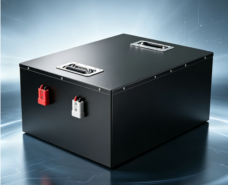
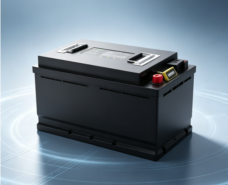

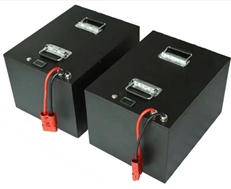 48V100Ah lithium battery pack
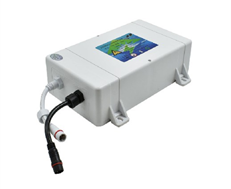 12V80Ah solar street light integrated battery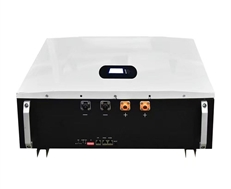
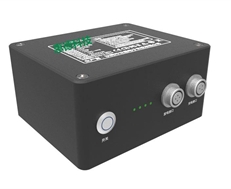 24V low temperature battery
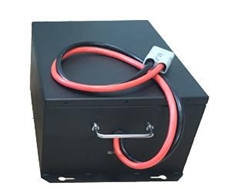 24V lithium iron phosphate battery
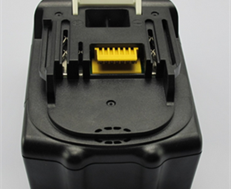 power tool battery
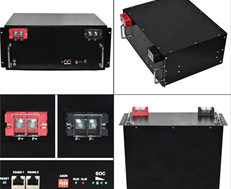 Solar photovoltaic cell
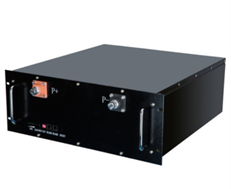 Communication base station battery
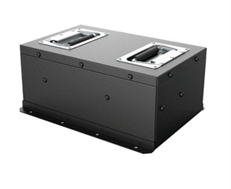 AGV battery
 Patrol cars use batteries
 Electric balance car battery
 Power tool battery